How to Explain PDA to a Child — A Low-Demand Approach
If you're a parent, educator or allied health professional supporting a child with a demand-sensitive nervous system, you've probably thought alot about this question — how do you help a child understand their own brain without activating shame, anxiety or a stress response?
It's one of the most important questions in PDA-informed support. And it's harder than it sounds.
Explaining PDA to a child isn't like explaining it to an adult. You can't sit them down with a fact sheet. And you can't make it feel like a demand — because the moment it does, the conversation is already over.
So what does work?
Starting with a story — not information
As human beings we love and connect with narratives, children are often especially connected and comfortable with story-telling. A story about someone, or something else — creates distance. This distance is everything when you're working with an exquisitely sensitive nervous system; because it creates space.
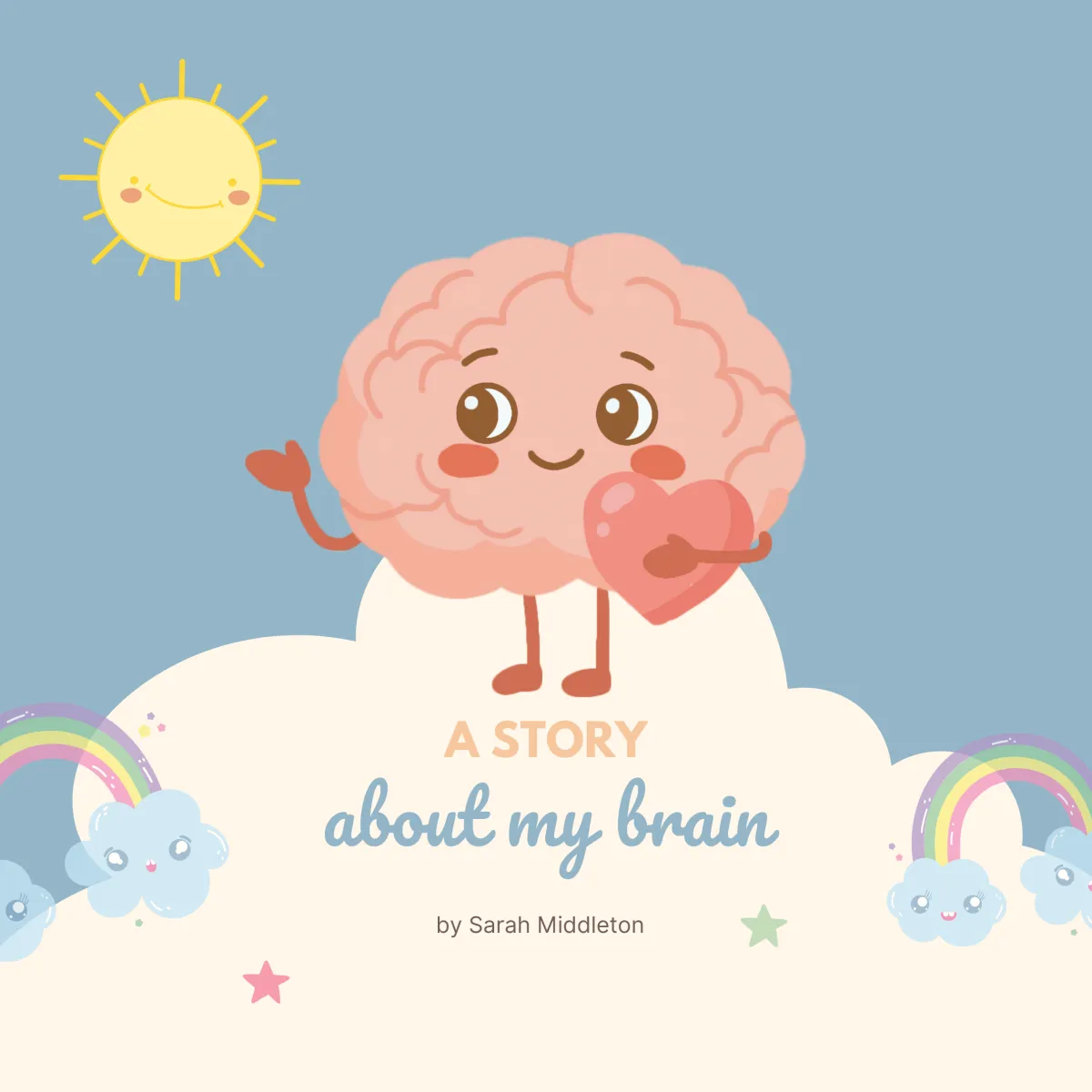
A Story About My Brain is a picture book written specifically for supporting exploration of a child's internal experience. It tells the story of a brain — not your brain, not their brain — just a brain. One that works hard to keep its person safe. One that says no, often, automatically. One that can make it hard to feel good and like you belong.
That small but significant distinction — a brain rather than their brain — means the child can engage with the ideas without feeling directly confronted by them. They can hold the story at arm's length if they need to. Or they can lean in and claim it as their own.
When I first shared this book with my son, I didn't tell him it was about him. I just invited him to look at something I'd made.
Halfway through he stopped and said — "this is my brain!!"
That recognition was his, totally on his own terms — he had full autonomy. He quickly asked me to share the book with his teacher and proceeded to say 'the whole world needs to see this'. He wanted this information to be understood and all of a sudden... this story I'd shared with him was his to share with others.
Strewing: a brilliant way to introduce the story
Have you heard of strewing? I had a parent e-mail me after purchasing the e-book, she said
'I'm exciting for my daughter to find this'.
I smiled, because one of the most PDA-friendly ways to introduce this book is through a practice called strewing — simply placing something interesting in a child's environment and allowing them to discover it, if and when they choose.
You might leave it on the coffee table. On the couch. No presentation. No expectation. No demand.
This honours the child's autonomy completely — trusting that they will engage with the resource if it feels right for them in the moment. And because there's no demand attached, their nervous system has a much better chance of being able to connect with the story.
A low-demand approach to reading the book together
The first read-through might be completely silent; or it could be chatty. There's no 'better' type of response; all are valid. You'll likely sense whether there's an invitation to conversation or whether silence is what's needed.
If conversation does open up — here are a few simple, indirect reflections as you're looking at the pages that can gently invite joining together in exploration, without further without creating pressure:
"Oh wow, that sounds really hard."
"I wonder how that brain feels when that happens......"
"My brain has said no before........I felt so stuck."
These aren't questions. They're not observations directed at the child. We're maintaining a sense of spaciousness by sharing our own noticing as we read - through. We're using gentle reflections — modelling curiosity and empathy without asking anything in return. They create space for the child to step into the conversation if they choose.
Why indirect language matters
For children with a demand-sensitive nervous system, even a well-meaning question can register as a demand and activate a threat response. By speaking about the brain in the book rather than asking the child directly about their own experience, you reduce that risk significantly. This is also known as 'declarative language'.
Using the book in schools and therapeutic settings
This book isn't just for home. Teachers and allied health professionals have found it to be a brilliant resource in their practice too.
One teacher shared that reading the story at the beginning of a Student Support Group meeting — as a way to bring the student's perspective into the room — was a powerful way to help all the adults orient to supporting the student by considering their internal experience first.
Therapists have used it as a gentle entry point into conversations that might otherwise take months to open; including with parents. This story is landing with people who are new to PDA and those who have been living/practising in the space for years. It's for everyone.
And parents have used it as a bridge — something they can share with a teacher or family member who doesn't yet understand what their child's daily experience feels like from the inside.
The book as a catalyst
A Story About My Brain won't explain everything. It isn't meant to. We can think of it as a catalyst — a doorway into understanding a demand-sensitive brain from the inside out.
Each page is layered with meaning, creating space for conversations to deepen understanding and honour the unique experience of each child.
Sometimes the most important thing we can offer a child who has spent their life feeling like something is wrong with them is a story that says — your brain makes sense.
A Story About My Brain is available now as an instant PDF download.
👉 Get your copy here — $12.99 AUD
Print at home or read on screen. Instant download.
About the author
Sarah Middleton is a trauma-informed, neurodiversity-affirming social worker, educator and Mum. She founded Brilliant Little Gems with a deep conviction that each of us carries an inner brilliance that is uniquely their own.
Reconnecting with brilliance 💎