Supporting Students with a PDA profile: Why Sticker Charts Can Increase Anxiety

Supporting Students with a PDA profile: Why Sticker Charts Can Increase Anxiety
If you’ve ever felt stuck trying to help a young person with a PDA profile engage in something, whether that’s a learning task, participating in an activity, or even brushing their teeth, this story may feel familiar.
I was working alongside a teacher who was supporting a student with a PDA profile. School felt overwhelming for him, and he generally said “no” to most things. Sometimes 'no' came through words, sometimes through behaviour. This teacher was thoughtful, patient and deeply committed; she was patient, trying flexible routines, offering choices, gently encouraging him, and connecting learning to his interests — and yet, despite all of that, meaningful change wasn’t happening.
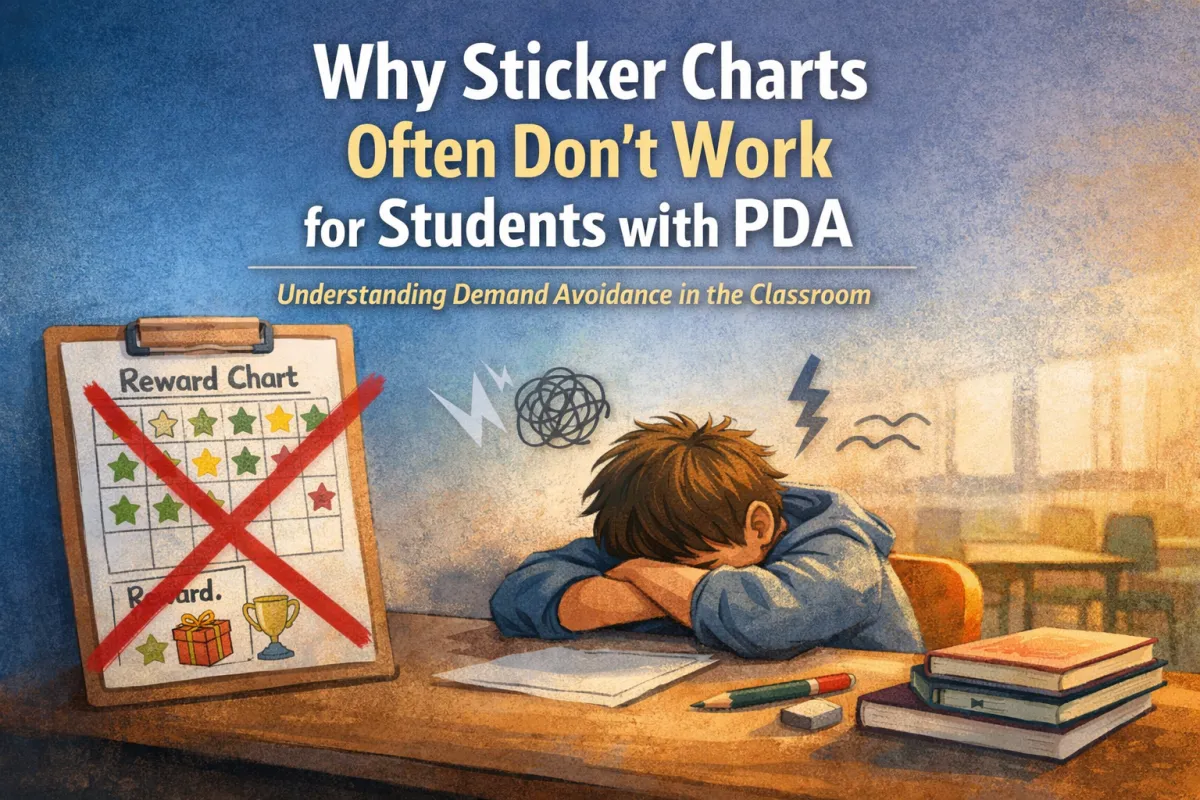
At the start of the year, she had set up a sticker chart as a positive and well-intentioned way to motivate him. Each small piece of work earned a sticker, and five stickers meant a reward. It seemed encouraging in theory, but in practice it worked perhaps 5% of the time — and only for tasks that were already heavily adjusted.
One day she said to me, “I feel like I’m meeting him 95% of the way and only asking him to take one small step — but he just won’t.”
There wasn’t frustration in her voice so much as confusion. She could see that he wanted to do well, but as soon as the focus shifted to work, his body told a different story. He would tense, joke, go quiet, try to pull her into conversation, or sometimes leave the classroom — anything to move away from that rising feeling of pressure.
When we stepped back and looked at what was happening through the lens of the PDA Escalation Pyramid, it helped us make sense of what we were seeing. From the outside, the sticker chart looked really positive. Through a nervous system lens, each sticker, each word of praise, and each small marker of progress could also register as another expectation layered onto a system, that was already working hard to stay regulated within the complexity of the sensory and social environment of school.
As we talked it through, the teacher began to notice that what had looked like refusal might actually be protection. That interpretation shifted something for her.
So she tried something different. We removed the rewards and placed more emphasis on connection, emotional regulation and timing, allowing him greater choice around when and how he engaged. The teacher took a leap of faith and trusted more in the student’s internal cues and preferences, and worried less about what she had been taught should define success in a classroom — and within weeks, a great deal shifted.
The same child who had only managed colouring-in began writing full sentences. The teacher was genuinely surprised. She said, “I think I finally get it now. I’ve been trying so hard — but it wasn’t about effort, was it? It was about his perceived sense of safety.”
That moment has stayed with me. I’ve noticed that whenever we shift from trying harder to understanding the nervous system perspective, things often begin to move.
If you’d like to explore these ideas more deeply and develop a clearer sense of what may be driving a student’s “no”, I’ve gathered together the resources that have most shaped my understanding and connected them in a way that supports practical, classroom-based clarity.
In the Toolkit, I unpack the PDA Escalation Pyramid more fully and include a detailed case example from a maths lesson to show how it can be applied in real time. You can explore it further here 👉 https://brilliantlittlegems.com.au/completepdatoolkitforschool