
The Complete PDA Tool-Kit
A PDA resource that speaks to everyone—teachers, parents, and professionals
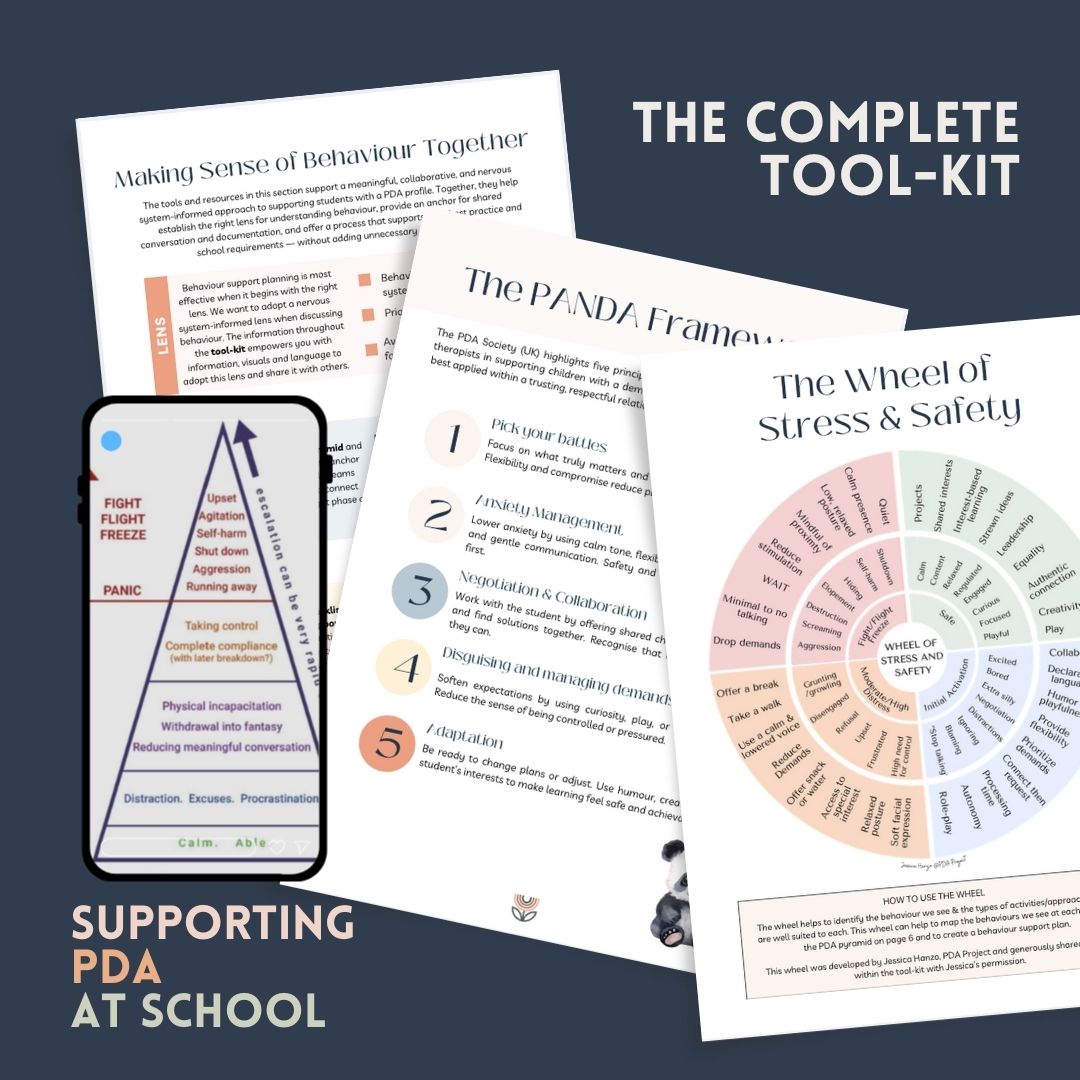
Printable resources, strategies & planning tools for PDA in the classroom
This 35 page toolkit is everything I wish I had when I first discovered PDA — both as a parent and as a professional supporting families and schools.
It turns complex ideas into accessible language, helping adults understand what’s really going on beneath the surface — and what actually helps.
Rather than offering “quick fixes”, this toolkit supports thoughtful, collaborative planning that:
Honours nervous systems
Reduces escalation & demand avoidance
Builds shared understanding between home, school and health professionals
Builds trust between student and teacher/adults
Buy Today for just $27!
Incredible value with ++ printable resources, step-by-step guidance & planning templates!
Who This Tool-Kit Is for
Teachers supporting students with anxiety and demand avoidance
School leaders building shared understanding and consistency
Parents navigating advocating for supportive environments
Allied health professionals working closely with schools and educators.
Professionals new to PDA and unsure where to begin
Education aides supporting students with complex nervous system needs
Teachers
Discover A New Way of Supporting students with a PDA profile —Without the Guesswork
Supporting children with high anxiety or demand avoidance can feel like navigating a whole new world—and the pressure to "get it right" can be overwhelming.
Whether you're a teacher trying to reduce meltdowns in the classroom, a parent advocating for your child, or a professional supporting families from the sidelines, the stakes feel high and the roadmap unclear.
This toolkit offers a clear, compassionate starting point. It helps you:
Build trust and connection through deeper understanding
Know what to do—and when (because timing is everything)
Move from overwhelm to confidence with practical, ready-to-use strategies
Hi, I'm Sarah.
social worker & educator
With a background in education & social work - I'm a true hybrid
As a neurodivergent mum of two ND kids, I live and breathe what I teach
I'm passsionate about helping educators and parents feel confident and connected, not overwhelmed
My vision is for all children to know and experience their own brilliance
Having the right tools
changes everything

What's inside the tool-kit?
Clear explanations of PDA and nervous system stress
The UK Society's PDA Escalation Pyramid explained
Jessica Hanzo's Wheel of Stress & Safety
Behaviour support planning guides and checklists
A colour-coded example Behaviour Support Plan
Conversation prompts for meetings and collaboration
Practical strategies mapped to different stages of escalation
A glossary of commonly used terms in relation to supporting students with a PDA profile
All resources are designed to be:
Easy to read
Easy to share
And simple to use in real classroom settings
This is not a prescriptive approach, it's a tool-box so as you can choose what’s relevant and share individual pages with colleagues, families or educators as needed.